Symantec Norton Utilities 160344 Full [extra Quality] A Tool Optimize Speed Up Computer Fix
| | Cons (Why You Should Be Cautious) | | :--- | :--- | | Streamlined Optimization: An all-in-one suite of cleanup, repair, and speed tools in a single interface. | Severe Security Risks: "Full" versions from unofficial sources are almost certainly malware-infected. | | Effective for Older PCs: Can provide a noticeable performance boost on systems running Windows 7 or 8. | Outdated for Modern Windows: Version 16.0 is not compatible with or optimized for Windows 10 or 11, leading to potential conflicts and instability. | | Data Recovery & Privacy: Features like file recovery and shredder offer significant value beyond simple cleanup. | Questionable Performance Gains: One benchmark test found Norton Utilities 16 improved overall system performance by only 3.84% , with a 2.73% decrease in word and data processing speed. | | Easy Automation: The Automatic Care feature simplifies regular PC maintenance for non-technical users. | Resource Usage: The software runs background processes and scheduled tasks that consume some system resources. | | Trusted Brand (Historically): Norton is a well-known name in PC security, providing a level of perceived reliability. | No Support or Updates: Symantec no longer supports this legacy product, meaning any bugs or security flaws will never be fixed. |
: Optimized software means your hard drive and CPU work less strenuously, reducing heat and wear.
Before you install, ensure your machine meets these basic specs for a smooth experience: : Windows XP (SP3), Vista, 7, or 8 (32/64-bit). Processor : 1 GHz or faster. RAM : At least 1 GB (2 GB recommended for 64-bit systems). Disk Space : Approximately 100 MB for installation. How to Get Started
Use the smart defragmenter to optimize hard drive access speeds.
For old PCs (Windows 7/8), the 160344 full version is still excellent. For modern machines, invest in the updated Norton Utilities Premium.
It is worth noting that Symantec has faced legal challenges regarding its marketing tactics. A class-action lawsuit from 2012 alleged that products, claiming the software always reported harmful errors, regardless of whether they actually existed, to pressure users into buying the full version. While Symantec has since updated its practices, this history underscores the importance of being an informed user who understands what issues are real versus potentially exaggerated.
Maximizing your computer's performance with Norton Utilities requires just a few straightforward steps. Step 1: Run a Comprehensive System Scan
Features an idle-time optimizer that cleans your PC silently whenever you step away from the keyboard. 5. System Requirements
If you want to discover more ways to maximize your operating system performance, let me know if you would like me to outline or explain the difference between HDD defragmentation and SSD optimization . Share public link
It does not require a constant, heavy background internet connection to perform basic maintenance.
Smart backup systems allow you to undo any registry or file modification safely.
: Before modifying the registry or deleting system files, always use the Windows Control Panel to create a backup restore point.
Many programs secretly configure themselves to launch the moment you turn on your computer. Norton Utilities identifies these startup programs and allows you to disable unnecessary background applications, dramatically shortening your system boot time. 3. Registry Cleaner and Defragmenter
How to Install Windows® 10 To A GUID Partition Table (GPT)
Properly Install Windows® 10 on Your Storage Disk With UEFI Enabled In The System BIOS And The GPT (GUID Partition Table) Created
Summary
We recommend performing Windows® 10 installations enabling UEFI with a GUID Partition Table (GPT).
Some features may not be available if you use the Master Boot Record (MBR) style partition table.
Configure a system to install an OS to a GUID Partition Table (GPT) partition
| Note |
- We highly recommended performing a backup of your data. If you have a second disk drive with enough available capacity, you can create a system image and recover the full installation as it was before you started this procedure.
- Screenshots and directions below are examples. Consult with your motherboard or system manufacturer for specific BIOS instructions.
|
- Connect a USB Windows® 10 UEFI install key
- Boot the system into the BIOS (for example, using "F2" or the "Delete" key)
- Locate the "Boot Options Menu"
- Set Launch CSM to "Enabled." If CSM is set to "Disabled," you can skip to step 8 below
- Set Boot Device Control to "UEFI Only"
- Set Boot from Storage Devices to UEFI driver first
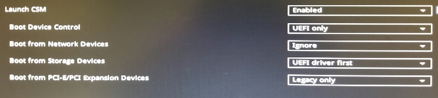
- Save your changes and restart the system.
- Reenter the BIOS (for example, using "F2" or the "Delete" key).
- Confirm in the Boot Priority List that the "USB UEFI OS Boot" option is at the top of the list.
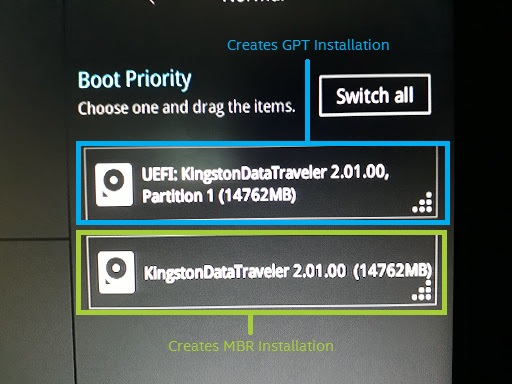
- Reboot the system and install Windows* as usual.
Confirm that Windows* is installed to a GPT partition. | | Cons (Why You Should Be Cautious)
- Boot into Windows*
- Open Disk Manager (For Windows® 10, press the "Windows*" key and the "X" key simultaneously, then click "Disk Manager"). You see three partitions including the EFI System Partition.
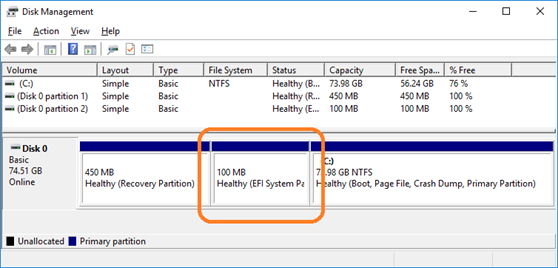
3. Right-click the disk shown as (Disk x, Basic, Capacity, Online) on the left
4. Select "Properties"
5. Click the "Volumes" tab. Here you can confirm the "Partition style".
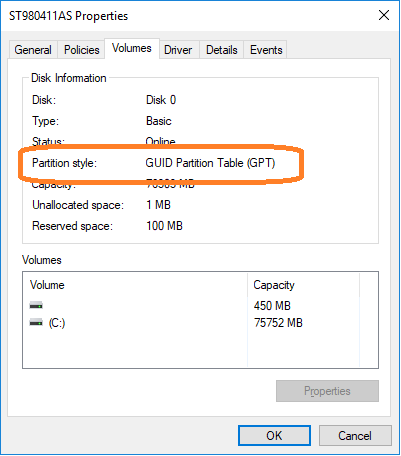
Questions? Check out our Community Forum for help. | Outdated for Modern Windows: Version 16
Issues? Contact Solidigm™ Customer Support:
[Chinese] [English] [German] [Japanese] [Korean]
| | Cons (Why You Should Be Cautious) | | :--- | :--- | | Streamlined Optimization: An all-in-one suite of cleanup, repair, and speed tools in a single interface. | Severe Security Risks: "Full" versions from unofficial sources are almost certainly malware-infected. | | Effective for Older PCs: Can provide a noticeable performance boost on systems running Windows 7 or 8. | Outdated for Modern Windows: Version 16.0 is not compatible with or optimized for Windows 10 or 11, leading to potential conflicts and instability. | | Data Recovery & Privacy: Features like file recovery and shredder offer significant value beyond simple cleanup. | Questionable Performance Gains: One benchmark test found Norton Utilities 16 improved overall system performance by only 3.84% , with a 2.73% decrease in word and data processing speed. | | Easy Automation: The Automatic Care feature simplifies regular PC maintenance for non-technical users. | Resource Usage: The software runs background processes and scheduled tasks that consume some system resources. | | Trusted Brand (Historically): Norton is a well-known name in PC security, providing a level of perceived reliability. | No Support or Updates: Symantec no longer supports this legacy product, meaning any bugs or security flaws will never be fixed. |
: Optimized software means your hard drive and CPU work less strenuously, reducing heat and wear.
Before you install, ensure your machine meets these basic specs for a smooth experience: : Windows XP (SP3), Vista, 7, or 8 (32/64-bit). Processor : 1 GHz or faster. RAM : At least 1 GB (2 GB recommended for 64-bit systems). Disk Space : Approximately 100 MB for installation. How to Get Started
Use the smart defragmenter to optimize hard drive access speeds.
For old PCs (Windows 7/8), the 160344 full version is still excellent. For modern machines, invest in the updated Norton Utilities Premium.
It is worth noting that Symantec has faced legal challenges regarding its marketing tactics. A class-action lawsuit from 2012 alleged that products, claiming the software always reported harmful errors, regardless of whether they actually existed, to pressure users into buying the full version. While Symantec has since updated its practices, this history underscores the importance of being an informed user who understands what issues are real versus potentially exaggerated.
Maximizing your computer's performance with Norton Utilities requires just a few straightforward steps. Step 1: Run a Comprehensive System Scan
Features an idle-time optimizer that cleans your PC silently whenever you step away from the keyboard. 5. System Requirements
If you want to discover more ways to maximize your operating system performance, let me know if you would like me to outline or explain the difference between HDD defragmentation and SSD optimization . Share public link
It does not require a constant, heavy background internet connection to perform basic maintenance.
Smart backup systems allow you to undo any registry or file modification safely.
: Before modifying the registry or deleting system files, always use the Windows Control Panel to create a backup restore point.
Many programs secretly configure themselves to launch the moment you turn on your computer. Norton Utilities identifies these startup programs and allows you to disable unnecessary background applications, dramatically shortening your system boot time. 3. Registry Cleaner and Defragmenter