 The EUREQA dataset
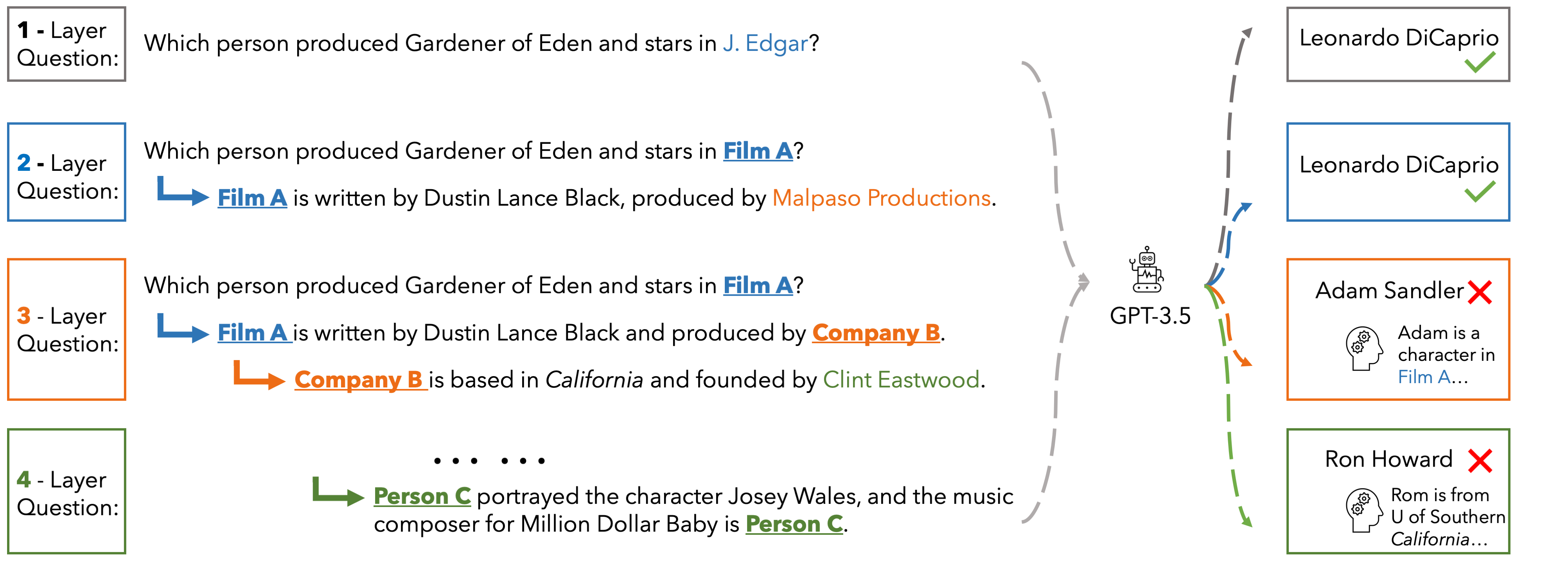
In EUREQA, every question is constructed through an implicit reasoning chain. The chain is constructed by parsing DBPedia. Each layer comprises three components: an entity, a fact about the entity, and a relation between the entity
and its counterpart from the next layer. The layers stack up to create chains with different depths of reasoning. We verbalize reasoning chains into natural sentences and anonymize the entity of each layer to create the question.
Questions can be solved layer by layer and each layer is guaranteed a unique answer. EUREQA is not a knowledge game: we adopt a knowledge filtering process that ensures that most LLMs have sufficient world knowledge to answer our questions.
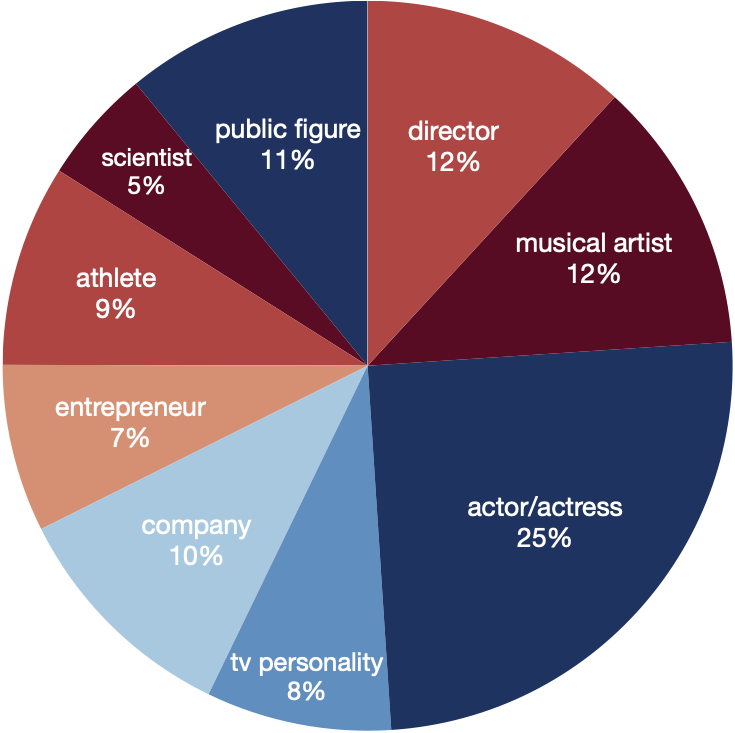
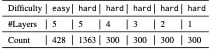
EUREQA comprises a total of 2,991 questions of different reasoning depths and difficulties. The entities encompass a broad spectrum of topics, effectively reducing any potential bias arising from specific entity categories.
These data are great for analyzing the reasoning processes of LLMs
Always check your specific sub-model:
The device will show: "Found update.bin - Version Q6x V2.3. Proceed? (Y/N)" Select Yes . The update takes 3-5 minutes. Do not interrupt power.
I can generate a tailored migration script or custom configuration file for your deployment. Share public link
This article dives deep into everything you need to know about the Q6x V2.3 update: its new features, step-by-step installation, troubleshooting common issues, and why this version is considered a mandatory upgrade for power users.
I can then provide the precise steps or point you toward the correct community resources! Share public link
Amlogic S905W (ARM Cortex A53, quad-core up to 1.2GHz or 2.0GHz depending on clocking).
Their conversation was interrupted when the Q6x chimed with an incoming protocol: "Alert: Cross-archive coherence conflict detected." For the first time, the device presented data without its comforting framing: a pulse of memory across the pool was triggering revisions in multiple profiles simultaneously, recalibrating how entire cohorts remembered a festival, a phrase, the tune of a common song. The Q6x asked, “Authorize consensus smoothing?” The option sat like a stone between them. Authorized, more smoothing would save retrieval energy and make community narratives easier to search. Denied, memories would remain more fragmented but truer to their original forms.
Let me know how you'd like to .
 Analyses and discussion
Always check your specific sub-model:
The device will show: "Found update.bin - Version Q6x V2.3. Proceed? (Y/N)" Select Yes . The update takes 3-5 minutes. Do not interrupt power.
I can generate a tailored migration script or custom configuration file for your deployment. Share public link Q6x V2.3 Firmware
This article dives deep into everything you need to know about the Q6x V2.3 update: its new features, step-by-step installation, troubleshooting common issues, and why this version is considered a mandatory upgrade for power users.
I can then provide the precise steps or point you toward the correct community resources! Share public link Always check your specific sub-model: The device will
Amlogic S905W (ARM Cortex A53, quad-core up to 1.2GHz or 2.0GHz depending on clocking).
Their conversation was interrupted when the Q6x chimed with an incoming protocol: "Alert: Cross-archive coherence conflict detected." For the first time, the device presented data without its comforting framing: a pulse of memory across the pool was triggering revisions in multiple profiles simultaneously, recalibrating how entire cohorts remembered a festival, a phrase, the tune of a common song. The Q6x asked, “Authorize consensus smoothing?” The option sat like a stone between them. Authorized, more smoothing would save retrieval energy and make community narratives easier to search. Denied, memories would remain more fragmented but truer to their original forms. The update takes 3-5 minutes
Let me know how you'd like to .
This website is adapted from Nerfies, UniversalNER and LLaVA, licensed under a Creative Commons Attribution-ShareAlike 4.0 International License. We thank the LLaMA team for giving us access to their models.
Usage and License Notices: The data abd code is intended and licensed for research use only. They are also restricted to uses that follow the license agreement of LLaMA, ChatGPT, and the original dataset used in the benchmark. The dataset is CC BY NC 4.0 (allowing only non-commercial use) and models trained using the dataset should not be used outside of research purposes.